How to Safely Prepare for Surgery
Last updated: 1 Aug 2026
How to Prepare for a Safe Surgery
Surgery can be a source of anxiety for many, even when doctors assure you it is a minor procedure. Some fear the pain, others are anxious about anesthesia, underlying health conditions, or the risk of infection, and many are simply unsure of how to prepare. In reality, surgical safety does not begin in the operating room—it starts on the day your doctor plans your treatment, reviews your medical history, orders blood tests, evaluates your medications, and when you begin preparing your body for the procedure.
Proper preoperative preparation significantly reduces risks such as anesthesia-related complications, surgical site infections, excessive bleeding, abnormal blood sugar levels, blood pressure fluctuations, postoperative pneumonia, and delayed recovery. International guidelines for perioperative care emphasize evaluating the patient as a whole, rather than just focusing on the surgical site. Your baseline health, underlying conditions, medications, nutrition, smoking habits, sleep quality, and home support all directly impact your postoperative outcomes.
This article provides a step-by-step guide on how to prepare, what to disclose to your doctor, fasting guidelines, medication precautions, and postoperative warning signs to ensure the safest possible surgery and the smoothest recovery.
1. Understand the "What" and "Why" of Your Surgery
Before surgery, you should have a clear understanding of the procedure, its purpose, alternative options, and expected outcomes. Key questions to ask your doctor include:
2. Disclose All Underlying Conditions
Some health conditions may seem unrelated to your surgery but can profoundly impact your safety. Conditions like diabetes, hypertension, heart disease, lung disease, kidney or liver disorders, blood disorders, obstructive sleep apnea (OSA), or a history of anesthesia allergies are crucial for your medical team to know.
For example, a diabetic patient with high blood sugar is at a higher risk for delayed wound healing and infection. A patient with heart disease requires a preoperative cardiovascular risk assessment. Those with sleep apnea need specific anesthesia planning and post-op monitoring. The 2024 AHA/ACC guidelines state that preoperative cardiovascular assessment should be individualized based on patient condition, surgical risk, urgency, and functional capacity—not a one-size-fits-all approach.
Essential information to share with your doctor:
4. Preoperative Assessment: Tailored to You
Many believe that a preoperative checkup requires extensive, exhaustive testing. However, modern guidelines emphasize necessary, individualized testing based on your specific health profile.
Possible preoperative tests may include:
5. Fasting Guidelines (NPO) Before Surgery
Fasting before surgery is critical to prevent the aspiration of food or stomach acid into the lungs while under anesthesia. The ASA 2023 guidelines have updated fasting protocols, particularly regarding clear liquids and carbohydrate drinks for specific patient groups. However, exact fasting times depend on the surgery, anesthesia type, aspiration risk, and specific instructions from your anesthesiologist.
General elective surgery fasting guidelines for healthy adults:
6. Optimize Your Chronic Conditions
If your surgery is elective (non-emergency), the preoperative period is the perfect time to get your body in peak condition.
Preparation goes beyond fasting and blood tests; it's about physical readiness.
Preventing infections is a top priority for the surgical team, and it requires a systematic approach before, during, and after surgery (per CDC and WHO guidelines), rather than just relying on antibiotics.
How you can help:
The surgical consent form is not just administrative paperwork; it is a critical moment for you to confirm you understand your treatment. Ensure you know:
10. What to Bring on the Day of Surgery
11. Postoperative Warning Signs
After surgery, monitor your general health and the surgical site. Contact the hospital immediately if you experience:
12. Surgical Safety Checklist: A Team Effort
Safe surgery relies on robust systems, not just individual skill. The WHO Surgical Safety Checklist is an international standard used by surgical teams to verify critical details before, during, and after surgery—such as patient identity, surgical site, procedure type, allergy risks, preoperative antibiotics, equipment, and team communication.
If the medical team repeatedly asks you to confirm your name, date of birth, and surgical site, they have not forgotten; they are actively performing safety protocols to prevent medical errors. You are a crucial part of this process: confirm your details clearly, report allergies, and speak up if you are unsure about anything.
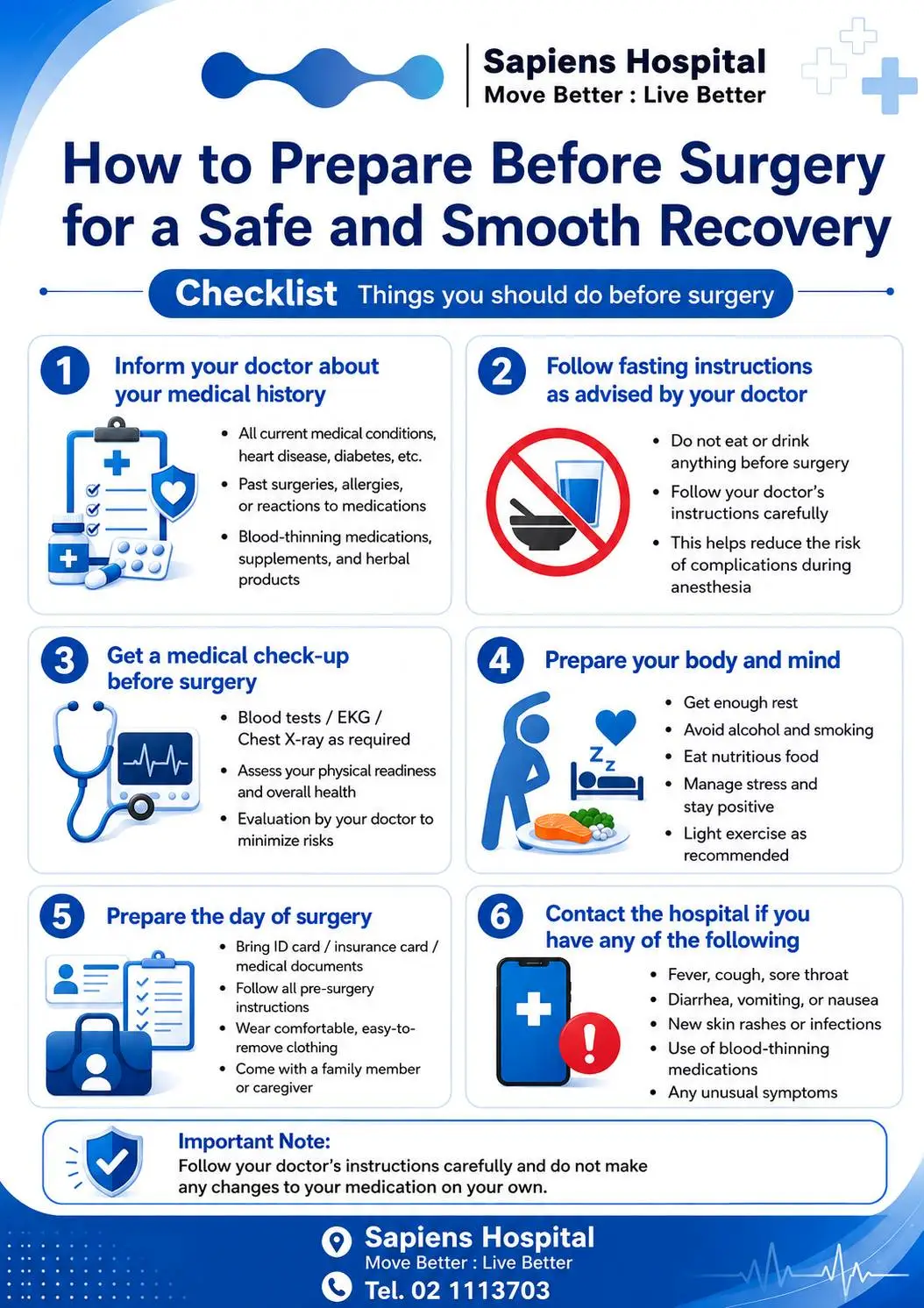
Frequently Asked Questions (FAQ)
For inquiries and appointments: Sapiens Hospital | Move Better : Live Better Tel: 02-111-3703
Academic References:
Centre for Perioperative Care. Preoperative Assessment and Optimisation for Adult Surgery. 2021.
Association of Anaesthetists. Pre-operative assessment and patient preparation: the role of the anaesthetist. Anaesthesia guideline.
Joshi GP, Abdelmalak BB, Weigel WA, et al. 2023 American Society of Anesthesiologists Practice Guidelines for Preoperative Fasting. Anesthesiology. 2023.
Thompson A, Fleischmann KE, Smilowitz NR, et al. 2024 AHA/ACC/Multisociety Guideline for Perioperative Cardiovascular Management for Noncardiac Surgery. Circulation. 2024.
World Health Organization. WHO Guidelines for Safe Surgery 2009: Safe Surgery Saves Lives.
World Health Organization. Implementation Manual: WHO Surgical Safety Checklist. 2009.
Berríos-Torres SI, Umscheid CA, Bratzler DW, et al. Centers for Disease Control and Prevention Guideline for the Prevention of Surgical Site Infection, 2017. JAMA Surgery. 2017.
World Health Organization. Global Guidelines for the Prevention of Surgical Site Infection. 2nd edition. 2018.
American College of Surgeons. Strong for Surgery: Preoperative Checklists.
ERAS Society. Enhanced Recovery After Surgery Guidelines.
Stenberg E, et al. Guidelines for Perioperative Care in Bariatric Surgery: ERAS Society Recommendations: A 2021 Update. World Journal of Surgery. 2022.
Royal College of Anaesthetists. Guidelines for the Provision of Anaesthesia Services: Preoperative assessment. 2023.
Surgery can be a source of anxiety for many, even when doctors assure you it is a minor procedure. Some fear the pain, others are anxious about anesthesia, underlying health conditions, or the risk of infection, and many are simply unsure of how to prepare. In reality, surgical safety does not begin in the operating room—it starts on the day your doctor plans your treatment, reviews your medical history, orders blood tests, evaluates your medications, and when you begin preparing your body for the procedure.
Proper preoperative preparation significantly reduces risks such as anesthesia-related complications, surgical site infections, excessive bleeding, abnormal blood sugar levels, blood pressure fluctuations, postoperative pneumonia, and delayed recovery. International guidelines for perioperative care emphasize evaluating the patient as a whole, rather than just focusing on the surgical site. Your baseline health, underlying conditions, medications, nutrition, smoking habits, sleep quality, and home support all directly impact your postoperative outcomes.
This article provides a step-by-step guide on how to prepare, what to disclose to your doctor, fasting guidelines, medication precautions, and postoperative warning signs to ensure the safest possible surgery and the smoothest recovery.
1. Understand the "What" and "Why" of Your Surgery
Before surgery, you should have a clear understanding of the procedure, its purpose, alternative options, and expected outcomes. Key questions to ask your doctor include:
- What is my exact diagnosis or medical problem?
- What will happen if I choose not to have the surgery?
- Are there non-surgical alternatives?
- How will the procedure be performed?
- Will it require local anesthesia, a nerve block, or general anesthesia?
- How many days will I need to stay in the hospital?
- How much pain should I expect afterward?
- How long will I need to take off from work or daily activities?
- What are the potential risks or complications?
- What post-op symptoms require an immediate return to the hospital?
2. Disclose All Underlying Conditions
Some health conditions may seem unrelated to your surgery but can profoundly impact your safety. Conditions like diabetes, hypertension, heart disease, lung disease, kidney or liver disorders, blood disorders, obstructive sleep apnea (OSA), or a history of anesthesia allergies are crucial for your medical team to know.
For example, a diabetic patient with high blood sugar is at a higher risk for delayed wound healing and infection. A patient with heart disease requires a preoperative cardiovascular risk assessment. Those with sleep apnea need specific anesthesia planning and post-op monitoring. The 2024 AHA/ACC guidelines state that preoperative cardiovascular assessment should be individualized based on patient condition, surgical risk, urgency, and functional capacity—not a one-size-fits-all approach.
Essential information to share with your doctor:
- All underlying medical conditions.
- History of previous surgeries or anesthesia.
- Any allergies to medications, food, local anesthetics, or general anesthesia.
- Past postoperative complications.
- History of easy bruising, prolonged bleeding, or blood clots.
- Snoring, sleep apnea, or current use of a CPAP machine.
- Current pregnancy or possibility of being pregnant.
- Loose teeth, dentures, or other dental issues.
- Availability of a caregiver after surgery.
Do not wait for the doctor to ask. Providing these details proactively can significantly alter and optimize your surgical and anesthetic plan.
3. Bring a Complete List of Medications, Supplements, and Herbs
Medications are one of the most common sources of preoperative complications. Many patients take multiple prescriptions, over-the-counter drugs, supplements, or herbal remedies without realizing their impact on surgery. Some drugs increase bleeding risks, alter blood pressure or blood sugar, or interact with anesthesia.
Key medications to highlight to your doctor include:
- Anticoagulants (Blood thinners): e.g., warfarin, dabigatran, rivaroxaban, apixaban.
- Antiplatelets: e.g., aspirin, clopidogrel.
- Diabetes medications and Insulin.
- Blood pressure medications.
- Corticosteroids.
- Immunosuppressants.
- NSAIDs (Non-steroidal anti-inflammatory drugs).
- Sleeping pills, anti-anxiety medications, or opioids.
- Supplements: e.g., fish oil, vitamin E, and certain herbs.
- Traditional or herbal medicines with unknown ingredients.
4. Preoperative Assessment: Tailored to You
Many believe that a preoperative checkup requires extensive, exhaustive testing. However, modern guidelines emphasize necessary, individualized testing based on your specific health profile.
Possible preoperative tests may include:
- Blood tests (e.g., CBC, electrolytes, kidney and liver function, blood sugar).
- Coagulation (blood clotting) tests, if indicated.
- Urinalysis, in specific cases.
- Electrocardiogram (EKG/ECG).
- Chest X-ray.
- Further specialized cardiac or pulmonary evaluations depending on risk factors.
- Assessment for anemia, nutritional status, and physical readiness.
5. Fasting Guidelines (NPO) Before Surgery
Fasting before surgery is critical to prevent the aspiration of food or stomach acid into the lungs while under anesthesia. The ASA 2023 guidelines have updated fasting protocols, particularly regarding clear liquids and carbohydrate drinks for specific patient groups. However, exact fasting times depend on the surgery, anesthesia type, aspiration risk, and specific instructions from your anesthesiologist.
General elective surgery fasting guidelines for healthy adults:
- Heavy or fatty meals: May require a longer fasting period.
- Light meals: Generally require a 6-hour fast.
- Clear liquids: May often be consumed up to 2 hours before surgery (for eligible patients).
- Note: Patients with severe acid reflux, delayed gastric emptying, diabetes, obesity, or who are pregnant may require stricter guidelines.
6. Optimize Your Chronic Conditions
If your surgery is elective (non-emergency), the preoperative period is the perfect time to get your body in peak condition.
- Diabetes: Keep blood sugar levels strictly controlled. High blood sugar is directly linked to delayed healing and surgical site infections. Adjust your medications or insulin only under your doctor’s guidance.
- Hypertension: Monitor your blood pressure regularly and take medications as prescribed. Extremely high blood pressure on the day of surgery may result in a cancellation or postponement for your safety.
- Heart Disease: Report any chest pain, fatigue, palpitations, fainting, or history of cardiac issues. High-risk patients may need specialized perioperative cardiovascular assessments.
- Lung Disease & Smoking: Report conditions like asthma, COPD, chronic cough, or inhaler use. Quitting smoking several weeks before surgery reduces pulmonary complications and promotes better wound healing (strongly recommended by ERAS guidelines).
- Kidney and Liver Disease: These organs affect how your body metabolizes anesthesia and medications, as well as your risk for bleeding or fluid retention. Provide recent lab results and medication lists.
Preparation goes beyond fasting and blood tests; it's about physical readiness.
- Eat sufficient protein: Protein is vital for tissue repair and wound healing. Poor nutrition increases infection risks. Programs like the American College of Surgeons' Strong for Surgery emphasize nutritional screening prior to operations.
- Appropriate exercise: Unless contraindicated by your doctor, light walking, breathing exercises, or basic muscle conditioning can speed up recovery, especially for major surgeries or elderly patients.
- Adequate sleep: Sleep impacts immune function, blood pressure, and blood sugar. Report severe insomnia or heavy snoring.
- Quit smoking and reduce alcohol: Smoking delays healing and increases infection and respiratory risks. Alcohol can interfere with anesthesia, liver function, and bleeding.
Preventing infections is a top priority for the surgical team, and it requires a systematic approach before, during, and after surgery (per CDC and WHO guidelines), rather than just relying on antibiotics.
How you can help:
- Shower or clean your body as instructed before surgery.
- Do not shave the surgical site yourself, as this can create micro-abrasions that harbor bacteria.
- Inform your doctor if you have any cuts, acne, abscesses, or rashes near the surgical area.
- Strictly control your blood sugar if you are diabetic.
- Stop smoking.
- Follow wound care instructions post-surgery exactly.
- Do not open the dressing prematurely or apply unapproved creams/herbs.
- Return to the hospital immediately if you experience fever, increasing pain, redness, swelling, heat, pus, or a foul odor from the wound.
The surgical consent form is not just administrative paperwork; it is a critical moment for you to confirm you understand your treatment. Ensure you know:
- The purpose of the surgery.
- The expected outcomes.
- The major risks.
- The possibility of the surgical plan changing midway.
- The potential need for a blood transfusion.
- The potential need for ICU admission (for high-risk cases).
- Postoperative care protocols and follow-up schedules.
10. What to Bring on the Day of Surgery
- ID card/Passport or identification documents.
- Insurance documents or company medical coverage forms.
- Relevant previous medical test results.
- Your complete, updated medication list (or the actual medications in a bag).
- Your CPAP machine, if you use one.
- Glasses, hearing aids, or other necessary personal devices.
- Loose, comfortable clothing and non-slip, easy-to-wear shoes.
- A relative or caregiver to receive post-op instructions.
- Emergency contact numbers.
11. Postoperative Warning Signs
After surgery, monitor your general health and the surgical site. Contact the hospital immediately if you experience:
- High fever or chills.
- Wound redness, swelling, severe heat, or worsening pain.
- Pus, heavy bleeding, or an abnormal odor from the wound.
- Uncontrollable pain despite taking prescribed painkillers.
- Shortness of breath, chest tightness, palpitations, or severe dizziness.
- Swelling or pain in the calves (signs of a potential blood clot).
- Severe vomiting, inability to eat or drink.
- Inability to urinate.
- Severe lethargy, confusion, or unusual weakness.
- Any symptom that makes you or your family feel unsafe.
12. Surgical Safety Checklist: A Team Effort
Safe surgery relies on robust systems, not just individual skill. The WHO Surgical Safety Checklist is an international standard used by surgical teams to verify critical details before, during, and after surgery—such as patient identity, surgical site, procedure type, allergy risks, preoperative antibiotics, equipment, and team communication.
If the medical team repeatedly asks you to confirm your name, date of birth, and surgical site, they have not forgotten; they are actively performing safety protocols to prevent medical errors. You are a crucial part of this process: confirm your details clearly, report allergies, and speak up if you are unsure about anything.
Frequently Asked Questions (FAQ)
- How many hours do I need to fast before surgery?
It depends on the procedure, anesthesia type, and your risk profile. Generally, for healthy adults, light meals are stopped 6 hours prior, and clear liquids may be allowed up to 2 hours before in specific cases. However, you must strictly follow the instructions given by your anesthesiologist and hospital.
- Do I need to stop aspirin or blood thinners before surgery?
Never stop these on your own. Your doctor must evaluate the risks. Some patients must stop them to prevent bleeding, while others must continue them to prevent heart attacks or strokes. The decision is highly individualized.
- Can I have surgery if I have diabetes?
Yes, in most cases, provided your blood sugar is well-controlled. High blood sugar increases the risk of infection and delayed healing. Always inform your doctor about all diabetes medications and insulins you use. - Does everyone need an EKG/heart check before surgery?
No. Cardiac evaluations are based on age, symptoms, underlying conditions, and the surgical risk level, following AHA/ACC stepwise guidelines rather than testing everyone unnecessarily. - If I have a cold or fever before surgery, should it be postponed?
It depends on symptom severity, the type of surgery, and the anesthesia planned. If you develop a fever, severe cough, wheezing, or suspect an infection, contact the hospital before your surgery date. Your doctor will assess whether to proceed or postpone for your safety. - How long before surgery should I quit smoking?
As soon as possible. For elective surgeries, quitting several weeks in advance significantly benefits lung function, wound healing, and recovery, as supported by ERAS guidelines. - How much pain is "abnormal" after surgery?
Mild to moderate pain is expected but should gradually improve and be manageable with prescribed medication. If pain continuously worsens, becomes unmanageable, or is accompanied by fever, severe swelling, or redness, contact the hospital immediately.
For inquiries and appointments: Sapiens Hospital | Move Better : Live Better Tel: 02-111-3703
Academic References:
Centre for Perioperative Care. Preoperative Assessment and Optimisation for Adult Surgery. 2021.
Association of Anaesthetists. Pre-operative assessment and patient preparation: the role of the anaesthetist. Anaesthesia guideline.
Joshi GP, Abdelmalak BB, Weigel WA, et al. 2023 American Society of Anesthesiologists Practice Guidelines for Preoperative Fasting. Anesthesiology. 2023.
Thompson A, Fleischmann KE, Smilowitz NR, et al. 2024 AHA/ACC/Multisociety Guideline for Perioperative Cardiovascular Management for Noncardiac Surgery. Circulation. 2024.
World Health Organization. WHO Guidelines for Safe Surgery 2009: Safe Surgery Saves Lives.
World Health Organization. Implementation Manual: WHO Surgical Safety Checklist. 2009.
Berríos-Torres SI, Umscheid CA, Bratzler DW, et al. Centers for Disease Control and Prevention Guideline for the Prevention of Surgical Site Infection, 2017. JAMA Surgery. 2017.
World Health Organization. Global Guidelines for the Prevention of Surgical Site Infection. 2nd edition. 2018.
American College of Surgeons. Strong for Surgery: Preoperative Checklists.
ERAS Society. Enhanced Recovery After Surgery Guidelines.
Stenberg E, et al. Guidelines for Perioperative Care in Bariatric Surgery: ERAS Society Recommendations: A 2021 Update. World Journal of Surgery. 2022.
Royal College of Anaesthetists. Guidelines for the Provision of Anaesthesia Services: Preoperative assessment. 2023.
Related Content

Breast pain or a lump: Is it breast cancer? Check early symptoms and the right screening methods. Discover which lumps need medical attention, plus clear guidelines for Ultrasounds and Mammograms.
9 Jul 2026

A minor foot wound can quickly escalate into a serious health crisis for patients with diabetes. Learn the warning signs and essential daily care tips to prevent chronic wound complications and avoid limb loss.
9 Jul 2026

What is appendicitis, and what kind of abdominal pain should raise concern? Discover the underlying causes, the warning signs you shouldn't ignore, and how modern surgical advancements promote faster recovery for your health.
30 Jun 2026
